
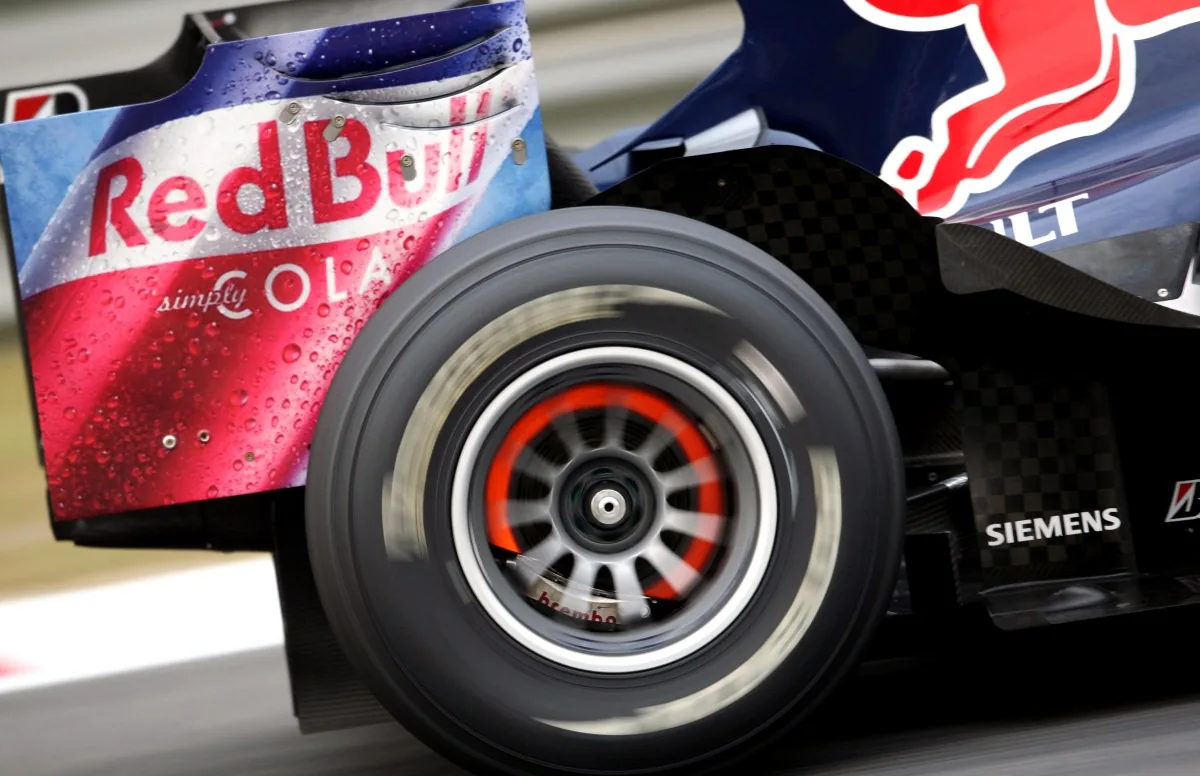
The Visual Drama at Corner Entry
First-time viewers watching a grand prix broadcast often notice bright crimson rings flashing inside a car's wheels at the end of a long straight. Understanding Why F1 brake discs glow red comes down to extreme friction: as the brake pads press against the spinning carbon discs to slow the car, mechanical energy turns into heat so intense that the carbon material emits visible light.
While this incandescence is easiest to spot during night sessions or twilight races, the underlying physics occur across daylight sessions as well.
Temperature Demands and Normal Operation
Seeing glowing components might look like an emergency, but carbon-carbon brakes actually require significant thermal energy to generate stopping power. Racing brakes function poorly when cold, meaning teams must deliberately keep them warm enough to operate efficiently while preventing them from exceeding safe thresholds.
A red disc does not inherently signify that a brake system is failing. As long as temperatures stay within designed operating windows, a noticeable glow is simply part of how these materials behave under aggressive deceleration.
Thermal Limits and Heat Dissipation
Severe braking demands can drive temperatures exceptionally high. Historic technical reporting from 2014 noted that Formula 1 disc temperatures could surpass 1,200°C in the most intense stopping zones, while endurance racing data illustrates that carbon discs can begin showing a visible glow around 600°C and brighten significantly above 1,000°C.
To prevent thermal buildup from causing accelerated pad wear or fading efficiency, discs are engineered with internal ventilation holes that shed heat into the surrounding airflow between braking events.
Official reference: Formula 1 official news and results.

Post a Comment