
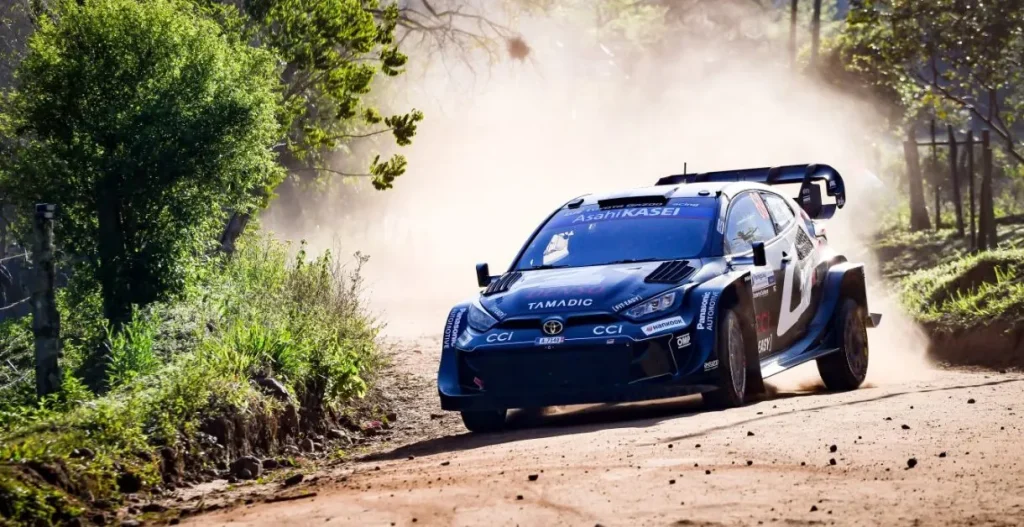
Why stage notes dictate rally speed
Watching a rally stage for the first time can make the driver look like they have memorised every inch of the countryside, but competitive speeds rely on continuous instruction called out by the co-driver. Instead of driving strictly by sight, rally drivers commit to blind corners, jumps, and hidden crests based entirely on the notebook read aloud in the passenger seat. If that communication link breaks, the car cannot safely travel at maximum attack.
What causes pacenotes to fail
A crew can lose their guidance in multiple ways across an event weekend. Heavy impacts or violent landings over jumps can physically rip the notebook straight out of a co-driver's hands, which happened to M-Sport co-driver Eoin Treacy alongside Josh McErlean in Paraguay. In other cases, the issue stems from missing details or inaccuracies recorded during reconnaissance. Because crews must create notes while adhering to low recce speed limits, such as 60 km/h noted by Thierry Neuville during the 2022 Rally Japan, the descriptions can sometimes fail to reflect what Rally1 machinery requires at full competition pace. Incidents involving WRC lost pace notes leave drivers abruptly navigating high-speed stages without a roadmap.
How drivers manage the gap
When pacenotes suddenly stop, the driver must instantly shift from anticipatory driving to visual survival mode. Without confirmation of what lies over a crest, the only safe response is to brake early, slow down, and read the road purely by eye. Crews rely on open straights or the distance approaching a known junction to regroup, retrieve dropped pages, and find their place in the book before picking up speed again.
Official reference: FIA World Rally Championship regulations.

Post a Comment